AI automation for companies: from ticket to completed task
nara is the platform by Würzburg-based nara GmbH for AI-powered IT automation. AI agents understand support requests, use company knowledge, execute approved tools, and document every action.
Würzburg
nara GmbH from Germany
End to end
Understand, execute, document
Controlled
Roles, logs, and escalation
In your stack
ITSM, knowledge, cloud, and local

Definition
What AI automation means in an enterprise
AI automation combines the reliability of clear processes with AI's ability to understand language, context, and unstructured information.
Traditional automation uses fixed rules: when A happens, execute B. That is efficient while inputs and exceptions remain predictable. In IT support, however, many cases start as free-form language, depend on the user, device, permissions, and current system state, and require several tools.
AI-powered automation adds understanding, triage, and contextual decisions to rules and workflows. An AI agent can classify a request, ask for missing information, retrieve relevant knowledge, and start an approved process. The decisive part is not the chat but controlled execution through to a documented result.
Understand
Identify the issue, intent, user context, urgency, and missing details from natural language.
Decide
Operating Protocols, knowledge, policies, and permissions determine the next traceable step.
Execute
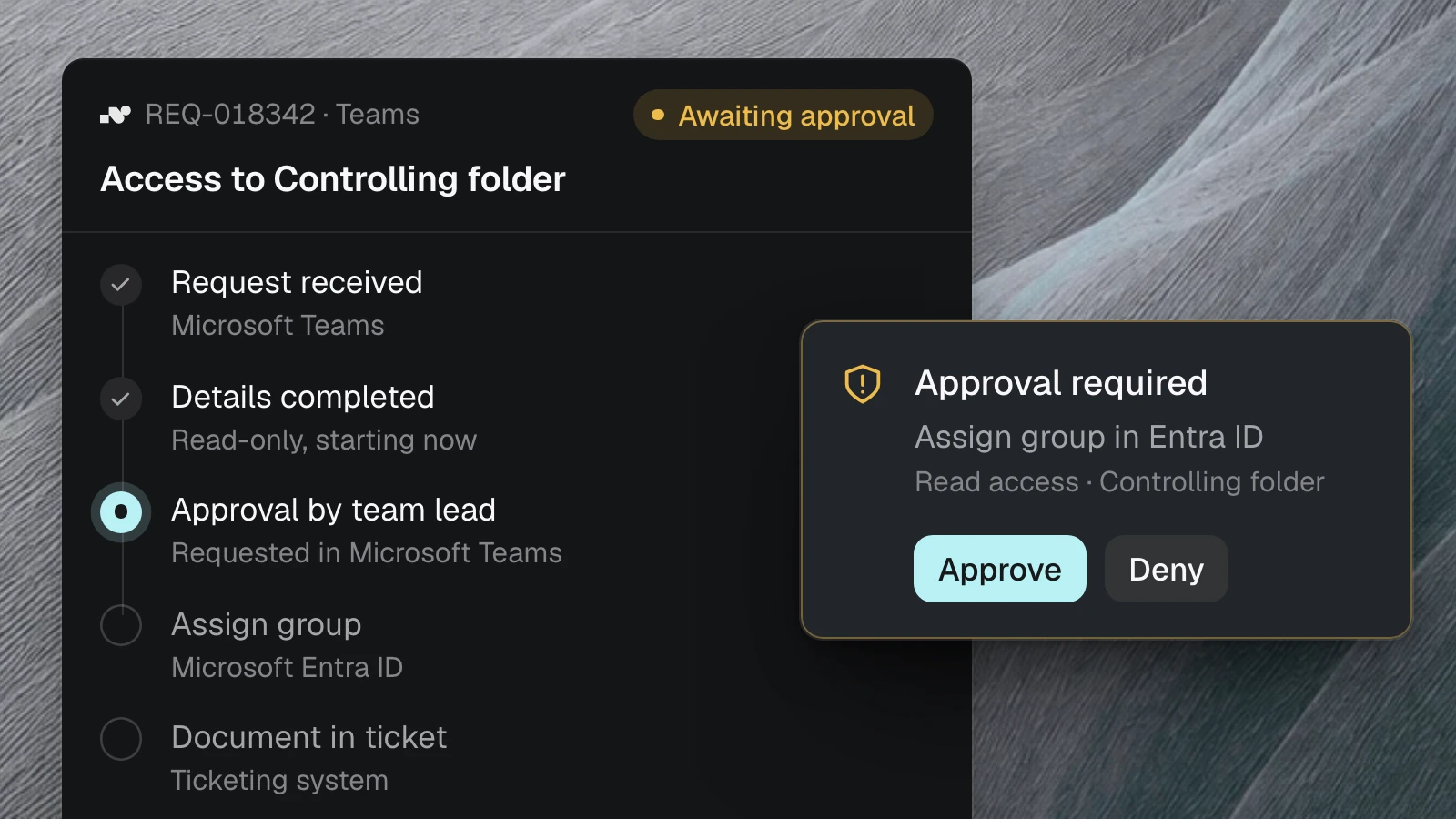
Approved tools change systems, update tickets, and hand complex or risky cases to people.
Where AI and IT automation creates immediate relief
The best starting point is frequent, clearly scoped requests with measurable effort and controllable actions.
IT service desk and helpdesk
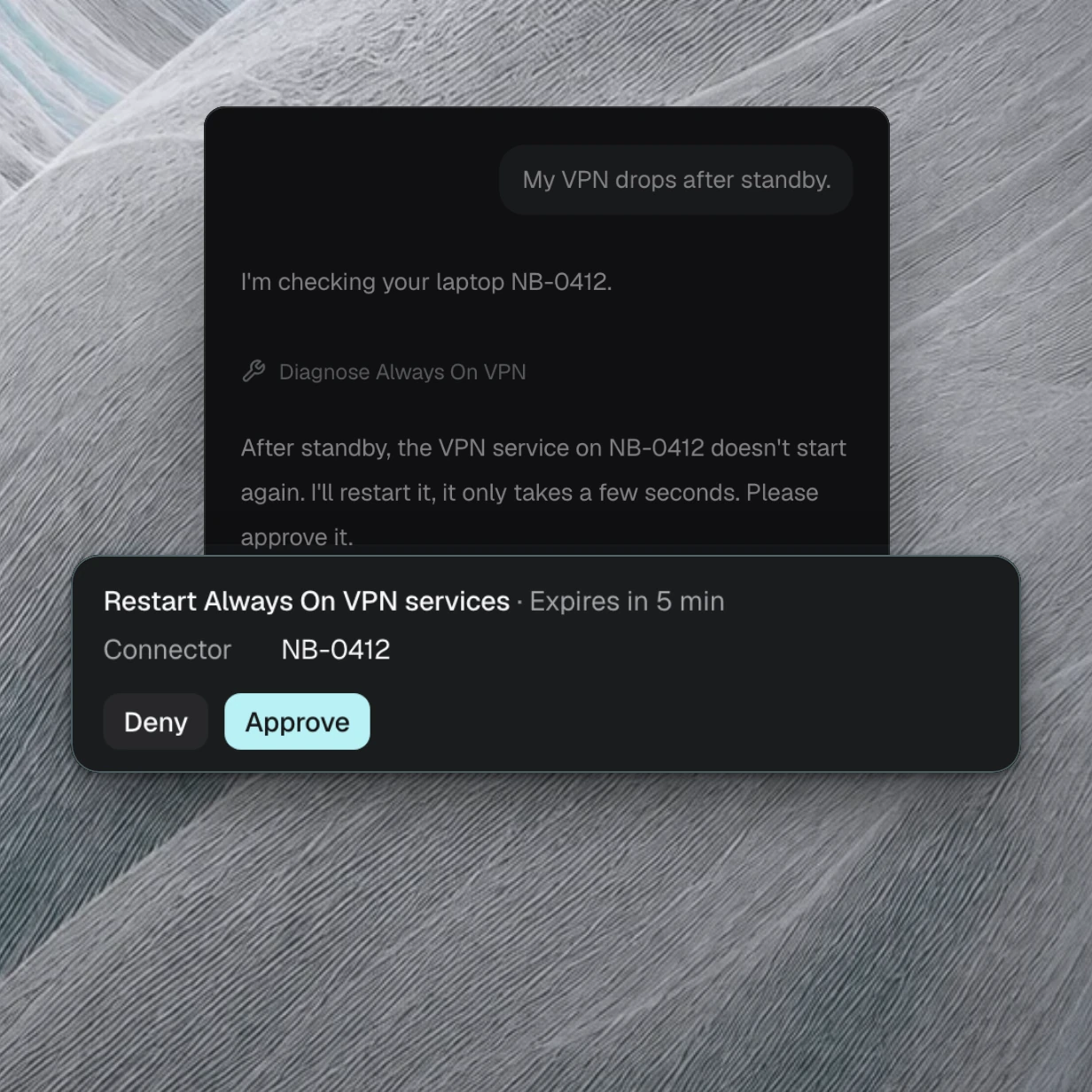
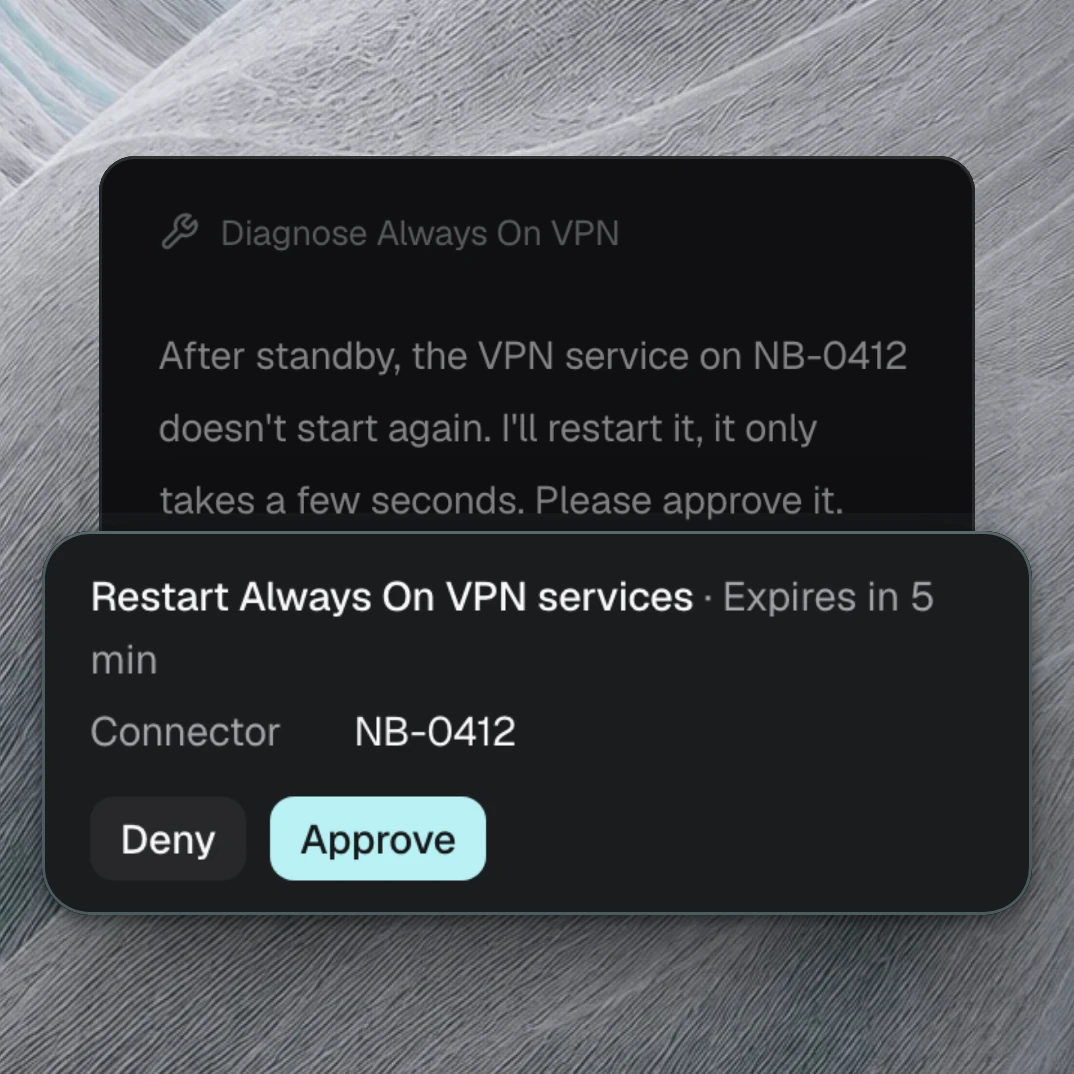
Automate password resets, VPN diagnostics, software requests, ticket status, and standard incidents from first contact to resolution.
Onboarding and offboarding
Coordinate joiner-mover-leaver processes, verify identities and devices, execute tasks, and keep necessary approvals with accountable owners.
Knowledge and service requests
Make scattered documentation usable with sources, identify knowledge gaps, and connect answers directly to suitable actions.
Managed service providers
Standardize, document, and resolve recurring first-level cases across clients without growing the technician team linearly.
nara connects the building blocks that must work together for production automation.
A chatbot answers questions but often stops where a system change is required. RPA can operate interfaces but does not automatically understand the intent of a freely worded support request. An agent builder provides components but often leaves runtime, permissions, monitoring, integration, and operations to the company.
nara combines AI agents, Operating Protocols, a structured knowledge layer, a tool registry, an Edge Connector, integrations, ticketing, and governance in one platform. The existing ITSM remains the system of record while nara takes over repeatable work.
nara GmbH is based in Würzburg and builds for European enterprise requirements. The hosting, data residency, and contractual options for each deployment are defined transparently before production. This creates a verifiable technical and organizational solution instead of generic compliance promises.
Tools, not just text
Agents can execute only explicitly approved actions and document their result.
Cloud and internal systems
The Edge Connector brings controlled execution behind firewalls, onto servers, and to devices.
Operational governance
Roles, logs, monitoring, versions, and escalation make automation traceable.
How companies start with AI automation
Not with a generic bot, but with a measurable process and a clear technical boundary.
Analyze volume
Ticket history, handling time, repetition, and escalations show where automation makes economic sense.
Result: prioritized automation cases
Define flow and boundaries
Operating Protocols, required knowledge, approved tools, roles, and human approvals are defined before execution.
Result: controllable pilot
Measure and expand
Resolution rate, handoffs, handling time, and errors are observed. Additional processes and systems follow only after that.
Result: evidence-based scaling
Common questions about AI automation
What is AI automation?
AI automation combines artificial intelligence with defined workflows and system actions. AI understands language and context; rules, permissions, and tools turn that into controlled, traceable execution.
Which IT processes can be automated with AI?
Suitable cases include frequent, clearly scoped work such as password resets, VPN diagnostics, software and access requests, ticket status, onboarding and offboarding, and knowledge-based standard questions. Risky or unclear cases are handed to people.
Is nara a German AI automation platform?
nara is a product of nara GmbH, based in Würzburg, Germany. Founded in 2025, the company develops an AI and IT automation platform for European enterprises and managed service providers.
Does nara replace ServiceNow, Jira, or another ITSM?
No. The existing ITSM can remain the system of record. nara receives requests, uses knowledge and approved tools, synchronizes status, and documents results in the existing system.
How does AI automation remain controllable?
Agents receive only approved tools. Operating Protocols define flows, roles and permissions limit access, logs and monitoring expose actions, and escalation rules hand sensitive or complex decisions to people.
How quickly can a company get started?
Timing depends on the process, data quality, integrations, and approvals. A scoped pilot with one frequent request type, a clear metric, and a defined handoff point is more effective than uncontrolled full automation.
Find the best first process for AI automation.
We review frequent support requests, involved systems, risks, and measurable automation potential.